

HS - Biology
B.1 Ecosystem Interactions & Dynamics
11 lessons | 27 days of instruction
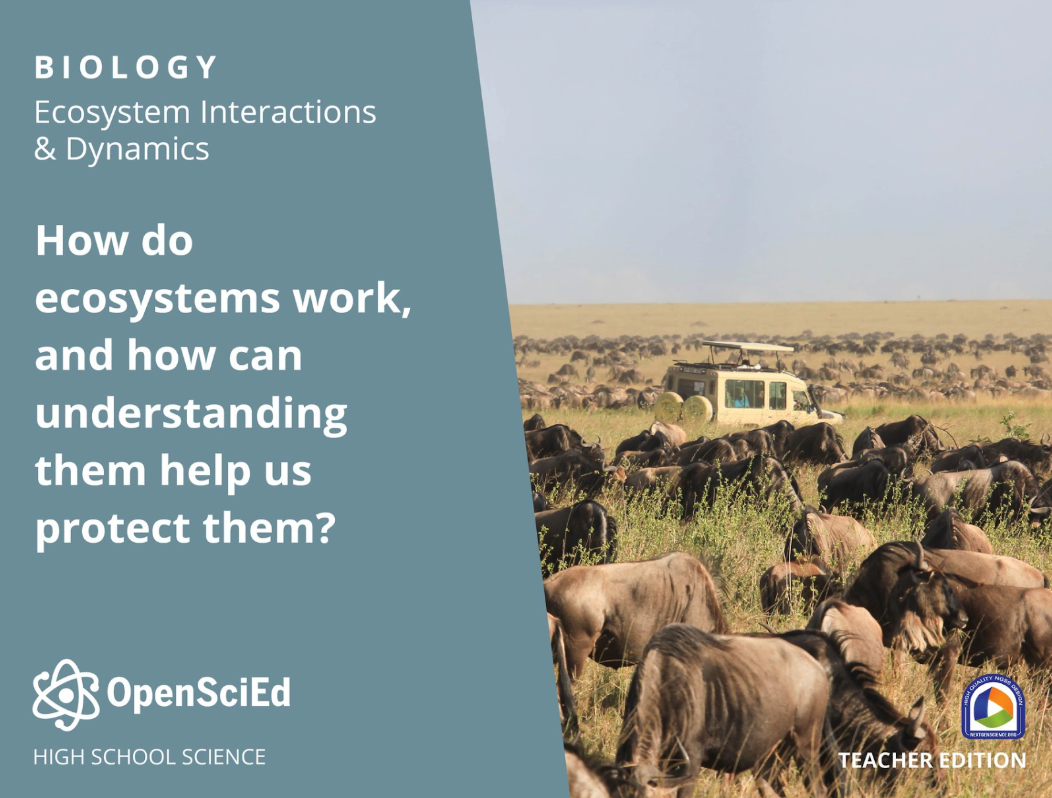
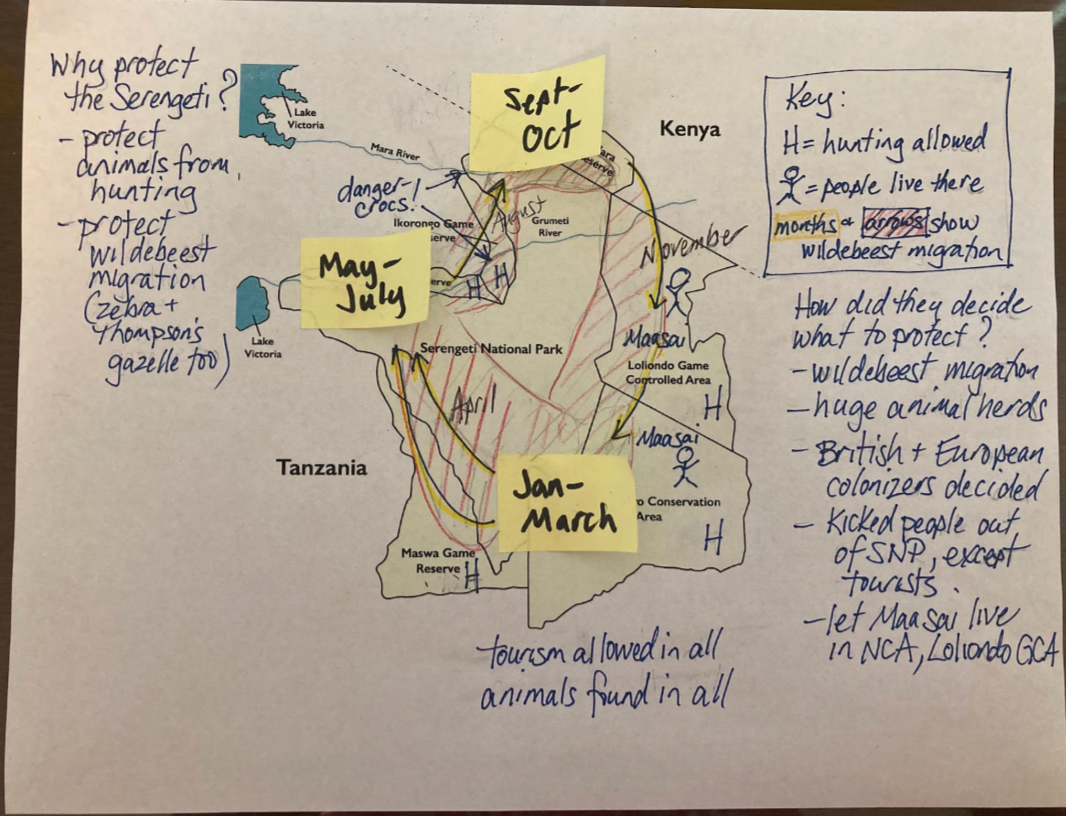
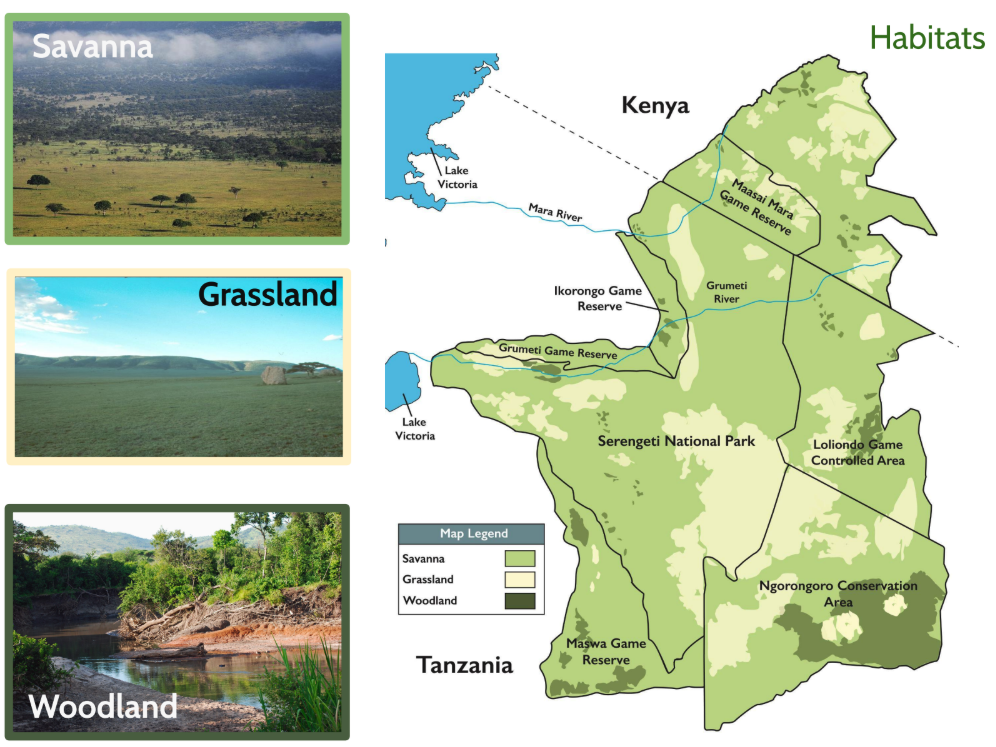
In this unit, students investigate the 30 by 30 initiative, a proposal to protect 30% of US lands and waters by 2030, and the reasons humans engage in conservation. Students use the Serengeti National Park as a case study to figure out ecosystem and conservation principles and apply those understandings to conservation dilemmas in the US.
Through investigations with complex data sets and hands-on simulations, students figure out how limiting factors impact carrying capacity, how group behavior impacts survival, and how biodiversity supports ecosystem resilience. By engaging with real-world conservation dilemmas and exploring various interest-holder perspectives, students identify the trade-offs humans make as they manage natural resources to support human society as well as the natural systems we live in.
Learn more in the Unit Storyline
SINGLE KIT | $
All materials for 1 class
MULTI KIT | $
Materials for 6 sections
ADD-ON | $
Consumables for 1 class
B.2 Ecosystems: Matter & Energy
12 lessons | 28 days of instruction
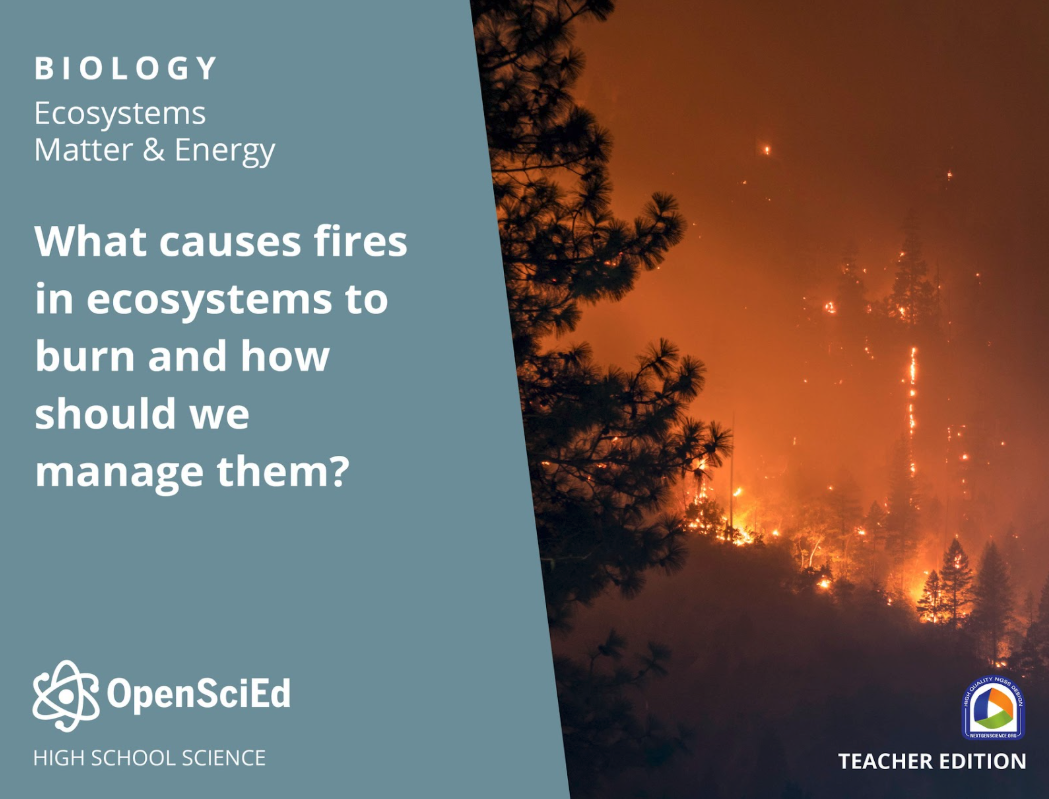
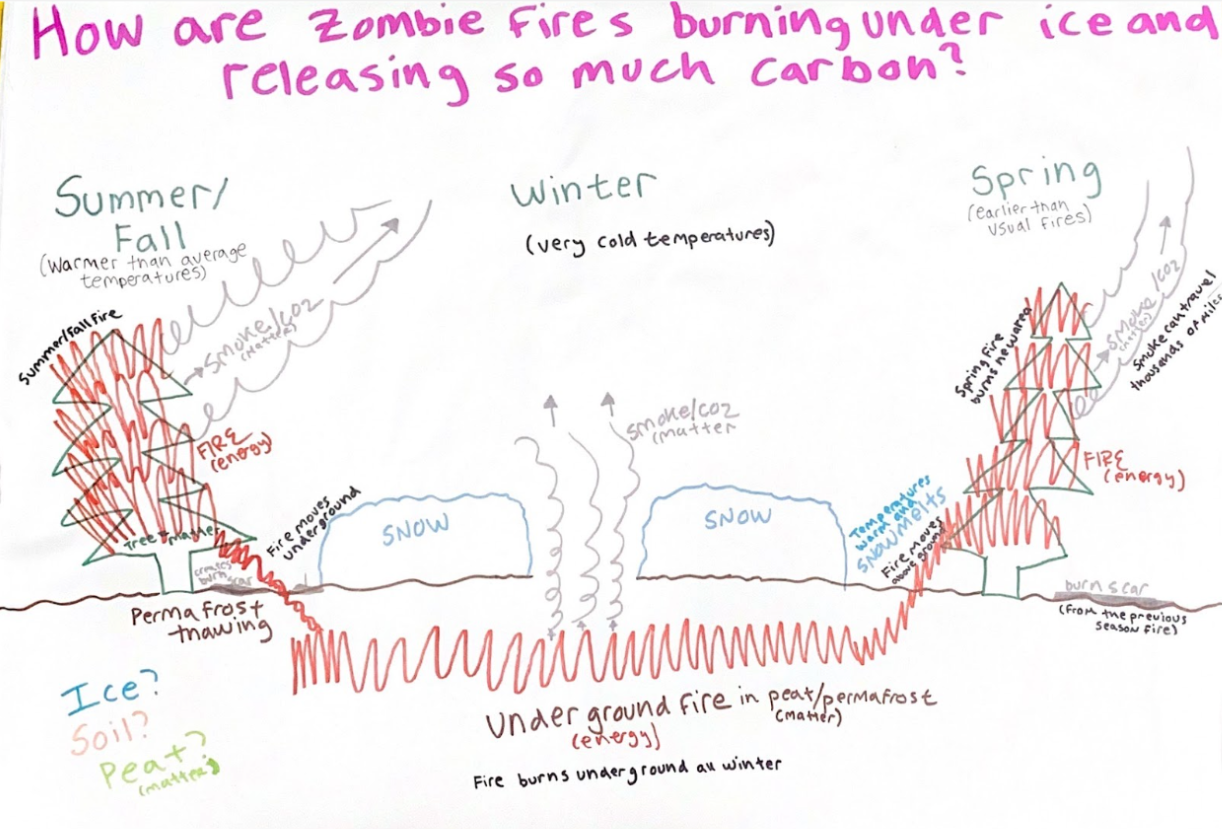
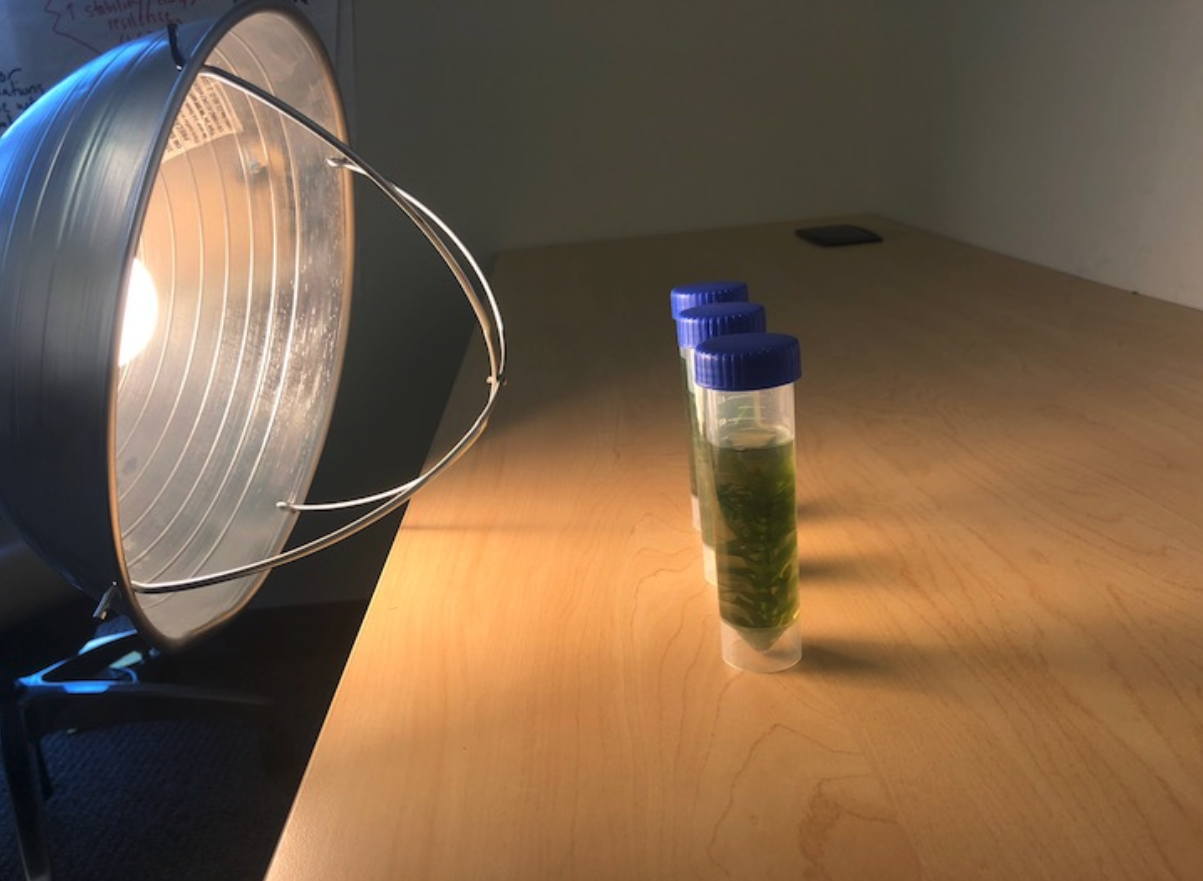
What causes fires in ecosystems to burn, and how should we manage them? This unit is designed to help students build a deeper understanding of the flow of matter and energy within ecosystems and the cycling of carbon on a global scale due to increased fires. Students read about mysterious arctic fires popping up near the burn scars of old fires and do a visual inquiry to obtain more information about what is happening with matter and energy in these arctic fire systems. To figure out how these fires can burn under ice and release so much carbon dioxide, students explore the interactions between peat, permafrost, decomposers, the sun, and other components of the system by investigating burning fuels, measuring the rate of decomposition and photosynthesis under different conditions. Students are motivated to see if they can generalize this phenomenon to other systems and the effect of increased carbon dioxide on the atmosphere. Students quantitatively model how matter and energy flow through different earth systems and different levels within an ecosystem. Finally, students use what they have figured out about positive feedback effects to design solutions to disrupt that flow of matter and energy in communities they care about.
Learn more in the Unit Storyline
SINGLE KIT | $
All materials for 1 class
MULTI KIT | $
Materials for 6 sections
ADD-ON | $
Consumables for 1 class
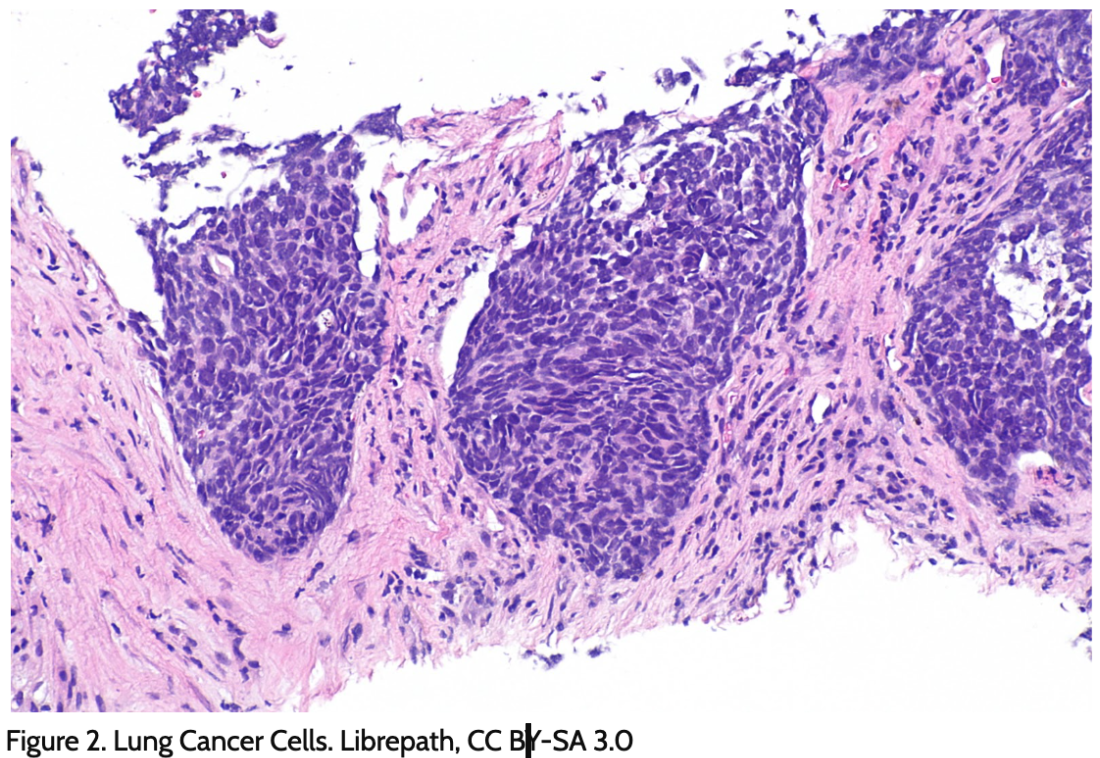
B.3 Inheritance & Variation of Traits
12 lessons | 26 days of instruction
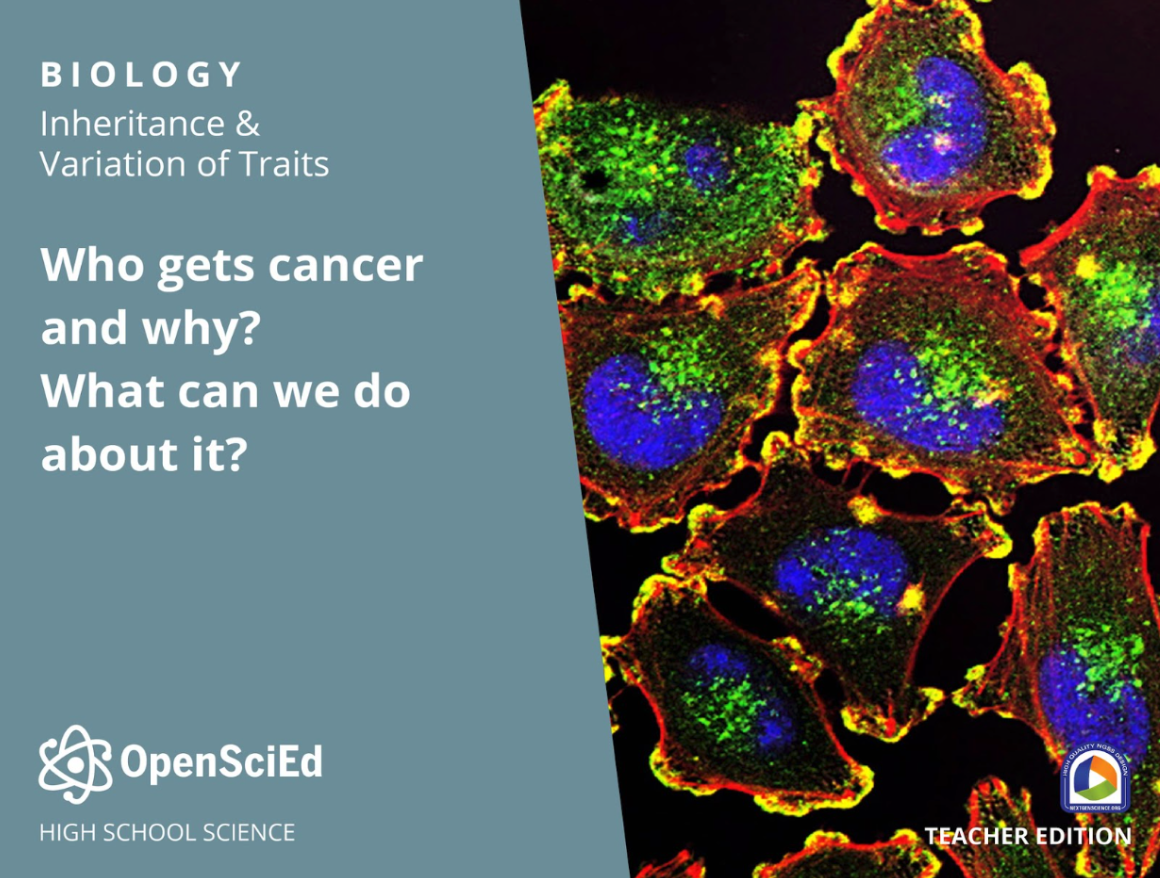
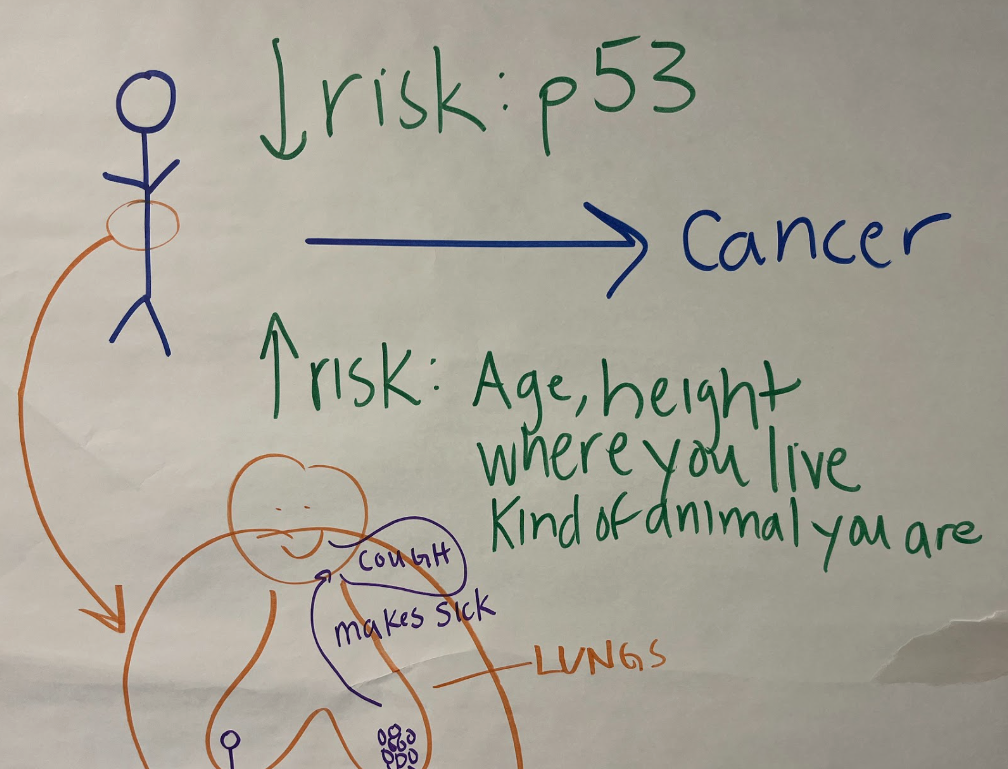
Who gets cancer and why? What can we do about it? This unit is designed to deepen student understanding of inheritance and variation of traits through an exploration of cancer as a phenomenon. In the first lesson set, students explore the genetic basis of cancer by investigating what cancer is and how mutations that can increase risk for cancer occur. While there are many genes implicated in cancer, the unit focuses on p53, a tumor suppressor gene that is involved in many different cancers. In Lesson Set 2, students investigate cancer caused by mutations that occur throughout our lifetimes, inherited mutations, and how the environment can cause mutations. In the third lesson set, students investigate additional factors that explain differences across the US in both instances of cancer and mortality, access and feasibility of treatment options, and explore the role of health navigator as a way to advocate for and help support friends and family that may be experiencing cancer.
Learn more in the Unit Storyline
SINGLE KIT | $
All materials for 1 class
MULTI KIT | $
Materials for 6 sections
ADD-ON | $
Consumables for 1 class
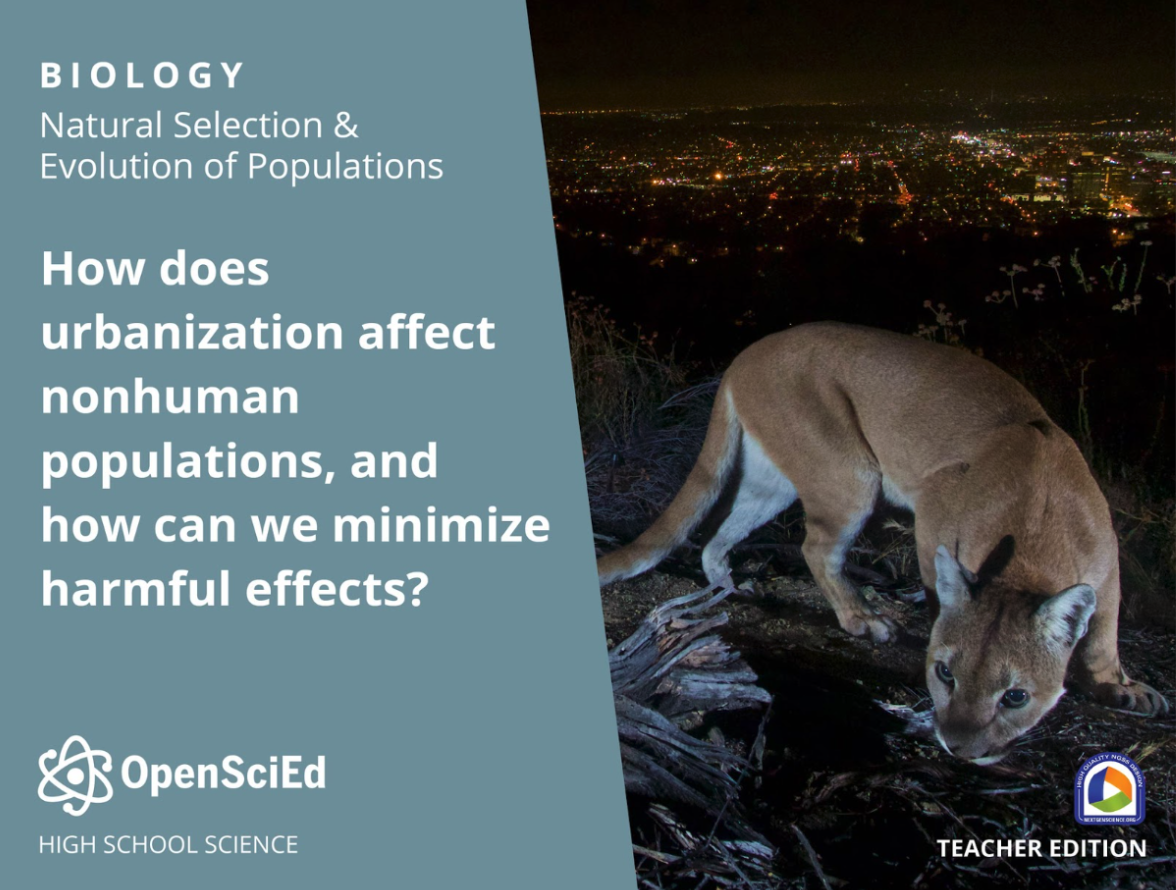
B.4 Natural Selection & Evolution of Populations
11 lessons | 23 days of instruction
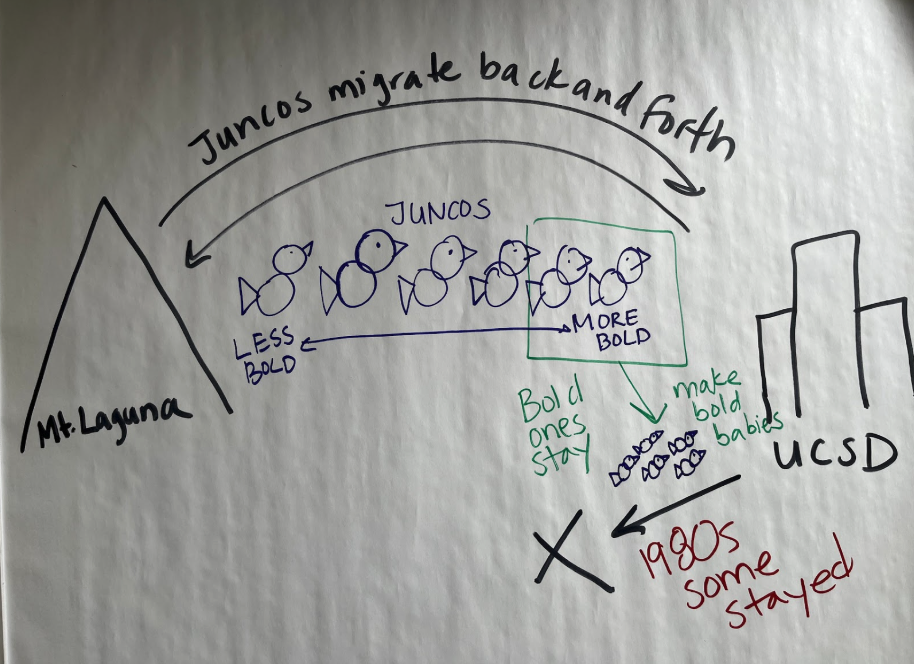
How does urbanization affect nonhuman populations, and how can we minimize harmful effects? This unit on natural selection and evolution of populations focuses on the phenomenon of increasing urbanization around the world and the impact of that change on nonhuman populations. Students investigate case studies that investigate fragmentation, poison, and proximity to humans as selection pressures that affect the relative fitness of individuals with particular anatomical, physiological, and behavioral traits in a population. Through investigations with complex data sets, they figure out how genetic diversity in a population allows populations to adapt to changes encountered in urban environments.
Students apply their knowledge of evolution by natural selection to explain why small, fragmented populations can be more vulnerable to change than large populations. They investigate the effectiveness of various human-engineered designs in reducing the effects of fragmentation on nonhuman populations. Students apply their knowledge to evaluate proposed design solutions for urban growth in Buckeye, Arizona, one of the fastest-growing cities in the United States. They discuss criteria to balance protecting biodiversity with human needs in the area.
Learn more in the Unit Storyline
SINGLE KIT | $
All materials for 1 class
MULTI KIT | $
Materials for 6 sections
ADD-ON | $
Consumables for 1 class
B.5 Common Ancestry & Speciation
9 lessons | 21 days of instruction
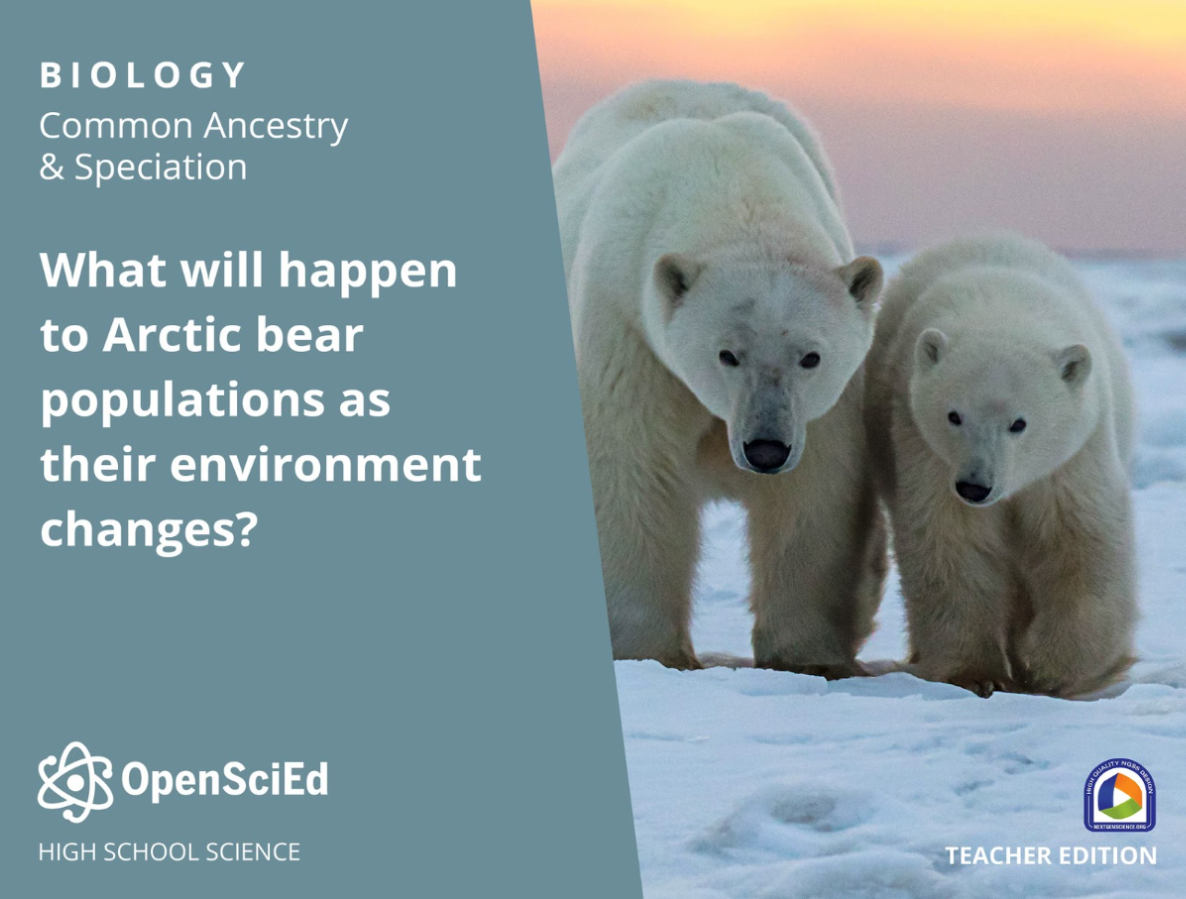
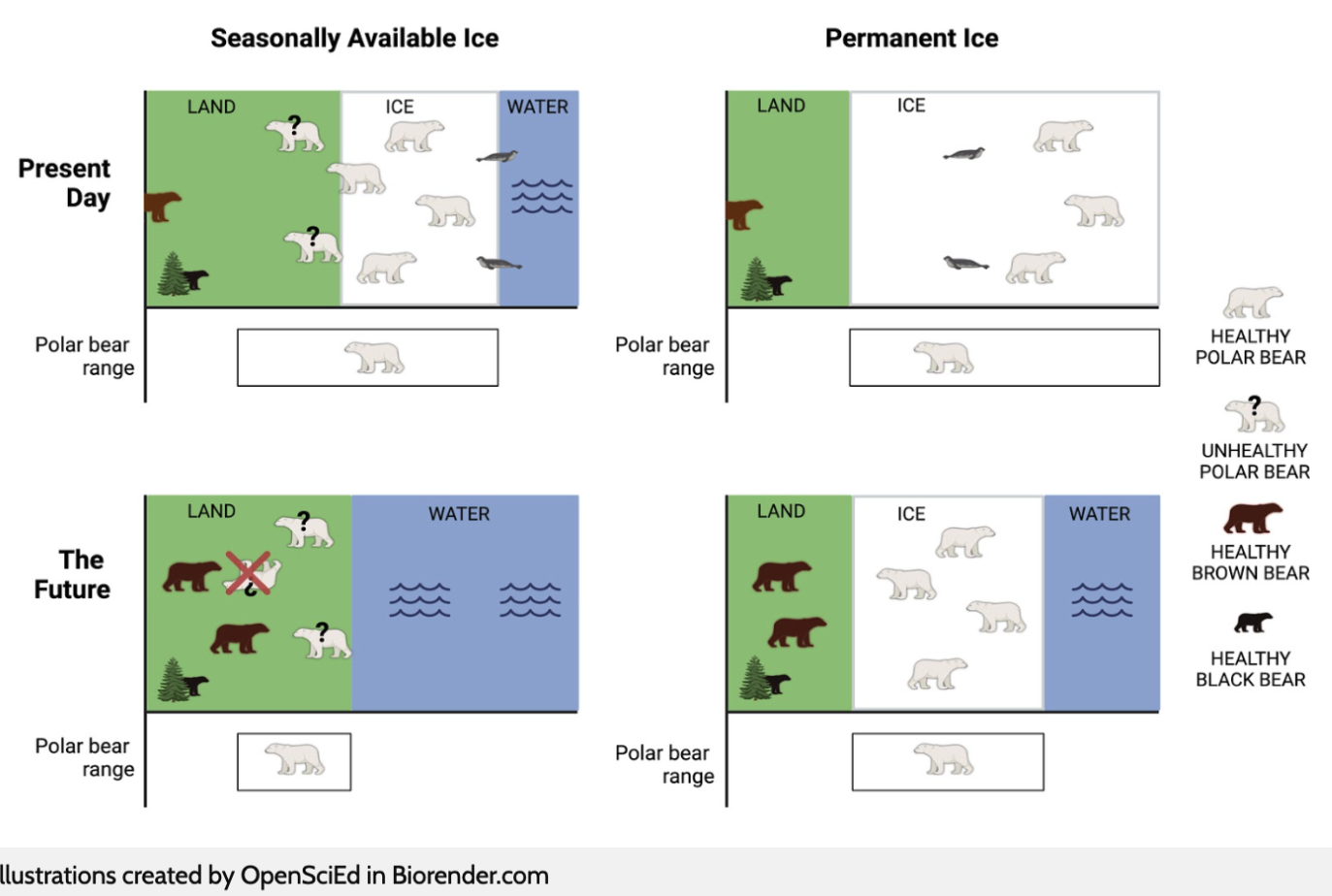
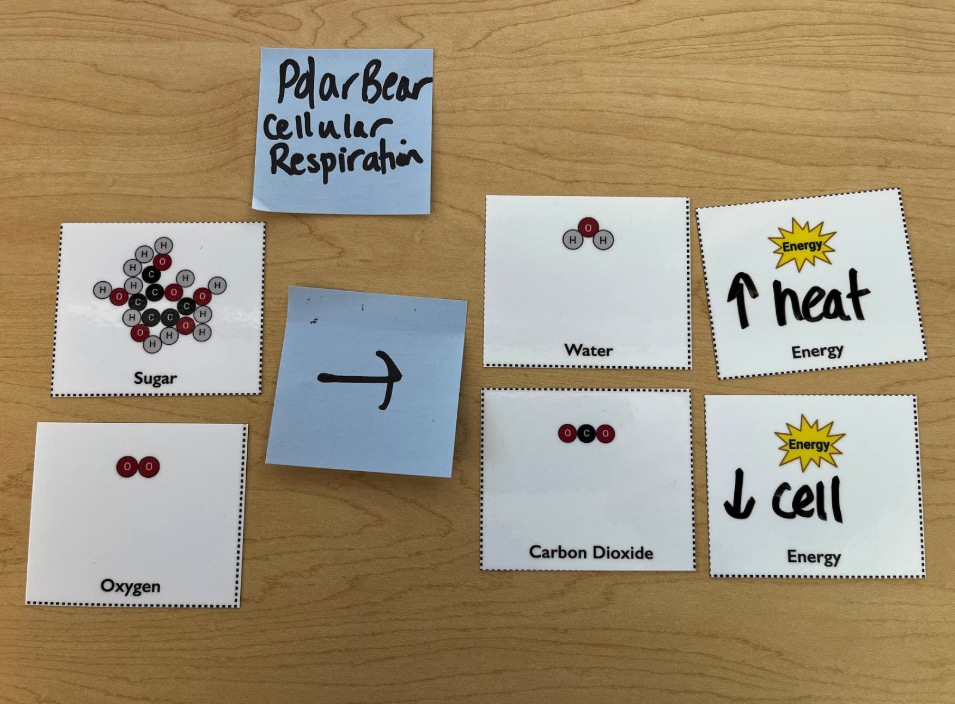
This unit is anchored by the unusual sightings of polar, brown, and black bears in Wapusk National Park. Students investigate why this is so unusual and consider what this means for the bears as the Arctic warms. Lesson Set 1 focuses on bear thermoregulation and how speciation occurred over geologic time. In Lesson Set 2 students learn about hybridization of bears as an alternative future for the bears. They consider the speed at which extinction and speciation events occurred in the past compared with changes occurring today. Students research ways humans protected other species from extinction and debate what role humans should play in protecting Arctic bears from extinction.
Learn more in the Unit Storyline
SINGLE KIT | $
All materials for 1 class
MULTI KIT | $
Materials for 6 sections
ADD-ON | $
Consumables for 1 class
Einstein Project is a 501(c)(3) non-profit STEM resource center driven to empower educators and inspire learners.