

First Grade

Tiny Flyers
5 Lessons | 28-30 Days of Instruction
Students listen to a read aloud about the migration journey of the ruby throated hummingbird. They investigate how and why the hummingbird migrates such a long distance each year. Throughout the unit, they study hummingbirds and explore how they care for their young. They also figure out that adult hummingbirds are similar, but not exactly like their parents. They use the information they gain throughout the unit to write a short story about the hummingbirds.
Learn more in the Unit Overview

Materials for 1 class | $275
Mastering mimicry
7 Lessons | 33-34 Days of Instruction
In this unit, students are introduced to biomimicry, or using inspiration from nature to solve human problems. They make observations with hands-on plant investigations to identify parts of plants and their functions. They connect each plant part back to biomimicry, thinking about how they could be used as inspiration to help protect a campsite. They make comparisons between plant parts as a plant grows, and throughout seasons, to determine how plants change, and how young plants are alike, but not exactly like, their parents.
Learn more in the Unit Overview

Materials for 1 class | $275
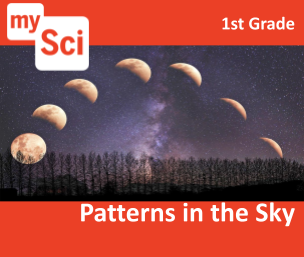
Patterns in the Sky
6 Lessons | 24-27 Days of Instruction
Students explore the patterns we observe in the sky by making observations, collecting data, and using models to explain what they see. They begin with the daytime sky, identifying predictable patterns in the Sun’s position and apparent motion. The unit then shifts to the nighttime sky, where students investigate the Moon’s repeating phases and why stars are visible only at night. Throughout the unit, they use science practices and crosscutting concepts to build a deeper understanding of Earth’s place in the universe.
Learn more in the Unit Overview
Materials for 1 class | $275
putting on a show with light and sound
8 Lessons | 32-36 Days of Instruction
In this unit, students explore the ways that sound and light can be used to communicate a story in a shadow puppet show. Students learn how vibrations create sound and that sound can cause materials to vibrate. Students learn how to incorporate pitch and volume into their instruments and consider how to combine different sounds to make music. Students explore design solutions by engineering a musical instrument out of recycled materials. Students then explore how light affects what we see and how it interacts with different materials. Students use this information to design shadow puppets for their show. Students then use the instruments and shadow puppets to put on a show with light and sound.
Learn more in the Unit Overview

Materials for 1 class | $275
Einstein Project is a 501(c)(3) non-profit STEM resource center driven to empower educators and inspire learners.